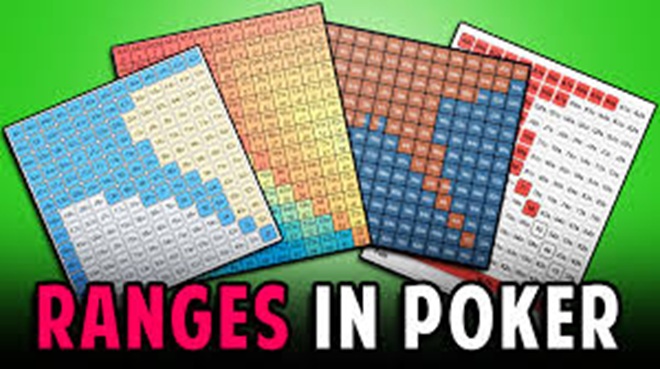
Understanding hand ranges and combinations is one of the most essential skills for any serious No-Limit Hold’em player. Whether you’re playing live or online, knowing how to assign accurate ranges to your opponents and calculate hand combinations allows you to make sharper, more profitable decisions. Professional players don’t just guess what their opponents might have—they use logic, math, and observation to narrow it down to a realistic set of possibilities. If you want to think like a pro, here’s how to master hand ranges and combos step by step.
1. What Are Hand Ranges and Why Do They Matter?
A hand range is the complete set of hands that a player could possibly have in a given situation. Instead of trying to put someone on one exact hand—like Ace-King—you should think of all the hands they could logically hold based on their actions. For example, a tight player raising from early position might have a range of strong hands like TT+, AQ+, and AK. A looser player in the same spot might include more speculative hands like suited connectors or small pairs.
By thinking in ranges, not individual hands, you gain a much more accurate understanding of your opponent’s potential holdings and can make mathematically sound decisions.
2. Using Combos to Add Precision
Combinations, or combos, represent how many ways a particular hand can appear in the deck. For instance, there are 16 possible combinations of AK (four suits for each card), but only 6 combinations of a pocket pair like QQ. Understanding these numbers helps you calculate the likelihood of certain hands appearing within a range.
For example, if the board is low and dry, and your opponent raises big, knowing that there are more combinations of AK than AA may help you decide whether to call, fold, or raise. Pros constantly weigh these probabilities when making moves, giving them a strong mathematical edge over casual players.
3. Categorize Opponents and Assign Realistic Ranges
Not all players construct ranges in the same way. Recreational players tend to play a much wider and less consistent range of hands, while professionals are more selective and position-aware. Begin by observing your opponents’ tendencies:
- Tight Players: Narrow range, strong hands only.
- Loose Players: Wide range, includes weak and speculative hands.
- Aggressive Players: Broad range, often mix strong hands and bluffs.
The more accurately you can categorize your opponents, the better your hand range assumptions become. On platforms like Junglee Poker, this kind of analysis becomes invaluable—especially when you can track opponents over multiple sessions and identify patterns in their gameplay.
4. Practice Range Construction
Building accurate ranges is a skill developed through practice. Start by reviewing hand histories and asking yourself: “What hands could my opponent reasonably play this way?” Over time, you’ll develop instincts for which ranges fit each type of situation.
For example, a small 3-bet from the blinds could represent a tight, value-heavy range, while a large one might indicate a polarizing strategy (either very strong or very weak hands).
The key is consistency. Once you learn to construct ranges logically, you’ll be able to adjust them dynamically based on position, stack size, and board texture—just like a pro.
5. Combine Math and Observation for Maximum Edge
The real magic happens when you merge mathematical reasoning with live reads and behavioral cues. For instance, a player who hesitates before betting may lean toward a weaker holding, narrowing their range even further. Meanwhile, strong live tells combined with combo analysis can confirm when an opponent’s story doesn’t add up.
This blend of observation and mathematics allows you to make decisions that are both analytical and intuitive. In live games or communities such as Poker Circle, developing this dual skill set can make you stand out as a highly adaptive and feared player.
6. Tools and Training for Range Mastery
There are several online tools and solvers that can help you visualize and analyze hand ranges more effectively. Programs like PokerStove, Equilab, or GTO+ allow you to simulate different hands, ranges, and board runouts to understand how your equity changes.
Use these tools regularly to test your assumptions and strengthen your understanding of poker theory. Over time, these exercises train your brain to think in ranges automatically during live play—without slowing down your decision-making.
Conclusion
Mastering hand ranges and combinations isn’t just about memorizing charts—it’s about developing the ability to think logically and adapt dynamically to every situation. By understanding the math behind combos, assigning accurate ranges, and constantly analyzing your opponents’ actions, you elevate your poker IQ to a professional level.
Whether you’re grinding online or facing live opponents, the ability to read ranges and calculate combos gives you a powerful edge that most players lack. Practice consistently, stay analytical, and soon you’ll be playing every hand like a true professional.