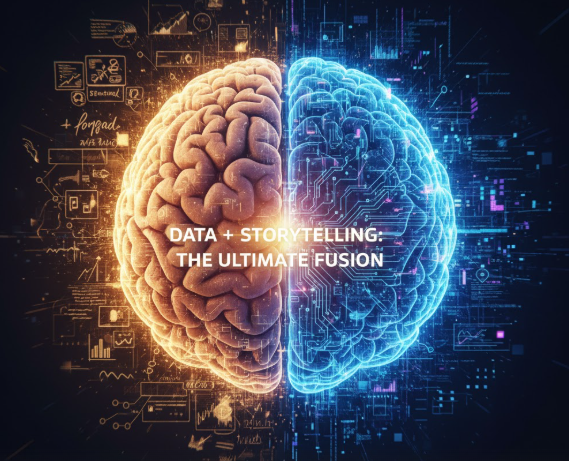
Every great ad tells a story, but here’s the twist: not all stories are written by humans anymore.
In 2025, your most successful brand narrative might not begin in a creative brainstorming session. It might start in a spreadsheet.
It sounds a little unromantic, doesn’t it? But that’s the quiet revolution reshaping marketing, the meeting point of data and storytelling.
And right at the center of this transformation sits the AI ads generator. It’s part analyst, part copywriter, and part creative director that never sleeps.
It doesn’t just write words. It builds arcs powered by performance data, emotional insights, and predictive modeling.
Why Data and Storytelling Were Always Destined to Meet
Let’s rewind a bit.
Traditional ad storytelling relied on instinct. You’d gather your team, toss ideas around, pick a favorite, and hope your audience connected with it.
The beauty of that process? Pure creativity.
The downside? Pure guesswork.
AI in marketing changes that equation. It helps brands merge emotion with evidence. Marketers can now map which hooks grab attention, which tones keep it, and which visuals convert best.
In simple terms: humans create the story, and AI helps perfect the script.
The AI Narrative Engine Explained
Imagine a machine that can analyze millions of ad impressions, identify the storytelling patterns that work best in your industry, and then generate new variations built around those insights.
That’s exactly what AI ad creation tools do, they transform raw data into meaningful narratives.
Here’s how the process typically works:
- Input: You feed the AI your product details, target audience, and past campaign results.
- Processing: It analyzes performance across platforms like Facebook, TikTok, and YouTube to see what works.
- Creation: The system then generates scripts, visuals, and CTAs modeled after proven narrative structures.
The outcome is simple: stories engineered for impact, not just intuition.
How AI Helps Brands Tell Better Stories
Let’s look at how this plays out in real-world campaigns.
- From Analytics to Ad Scripts
A fashion brand found that bold prints, bright colors, and confident poses drove the most engagement. Using an AI ads generator, they built ad scripts celebrating individuality and energy. The result was a 42 percent jump in click-through rates. - From Browsing Patterns to Brand Voice
A SaaS company noticed visitors spent more time on case studies than product pages. With an AI ad creation tool, they crafted short, relatable lines like “Before QuickTech, scheduling was chaos. After QuickTech, Mondays make sense.” The shift lowered cost per acquisition by 27 percent. - From Audience Data to Emotional Tone
A fitness app used AI advertising tools to study user motivations. Half wanted energy, the other half wanted structure. The AI created two storylines, “Wake Up Your Energy” and “Build Your Routine,” doubling engagement.
Why AI Storytelling Works So Well
At its core, storytelling is really about recognizing patterns and that’s something AI is exceptionally good at.
Every great story follows a familiar rhythm that audiences connect with. It might start with a problem, move through a struggle, find a solution, and end with a reward. Some stories challenge a myth, uncover a truth, and show transformation. Others begin with the audience’s experience, touch their pain points, and lead them to a hero moment.
AI studies these patterns across thousands of campaigns, learning which story structures resonate most with different audiences. It doesn’t replace creativity; it enhances it by finding the rhythm that makes every story more powerful.
It’s storytelling at a scale no human team could manage manually.
But What About Authenticity?
This is where most marketers raise an eyebrow.
Sure, AI can mimic storytelling. But can it feel authentic?
Authenticity isn’t about who writes the story, it’s about how it makes people feel. If your audience connects emotionally, the origin of the story matters less than its sincerity.
That said, human input still matters. You decide the tone, ethics, and emotional boundaries, the things AI can’t fully grasp.
AI might suggest a punchy line, but you decide whether it fits your brand’s values.
Think of AI as a co-writer that never gets tired, never runs out of ideas, and never complains when you hit “regenerate.”
The New Role of Marketers: Story Editors, Not Scriptwriters
As AI ad generators take over the repetitive parts of content creation, marketers are shifting roles.
You’re no longer just writing every line; you’re curating and refining the narratives that deserve the spotlight.
It’s similar to what happened in filmmaking when digital editing arrived. Editors didn’t vanish, they became even more powerful, crafting stories with precision rather than scissors.
In marketing, you’ll spend less time producing ads and more time shaping stories that scale.
The Competitive Edge
Brands using AI-driven storytelling aren’t just faster; they’re smarter with every campaign.
Instead of guessing what resonates, they know it because the data confirms it.
According to a 2025 HubSpot study, companies using AI ad creation tools with built-in storytelling logic saw:
- 35 percent higher conversion rates
- 22 percent lower ad fatigue
- 3 times faster creative refresh cycles
The lesson is clear: success doesn’t come from shouting louder. It comes from telling sharper stories, and AI helps you do that consistently.
Final Take: Numbers Don’t Kill Creativity, They Refine It
Data and storytelling were never opposites. They’re dance partners.
One leads with facts, the other moves with feeling.
AI ads generator is the bridge between the two – turning analytics into artistry. They don’t replace human creativity; they supercharge it with precision.
The future of great advertising won’t belong to whoever tells the best story. It will belong to those who tell the most adaptable one.
So next time you open your ad dashboard, don’t just see numbers. See your next story waiting to be told, one dataset at a time.