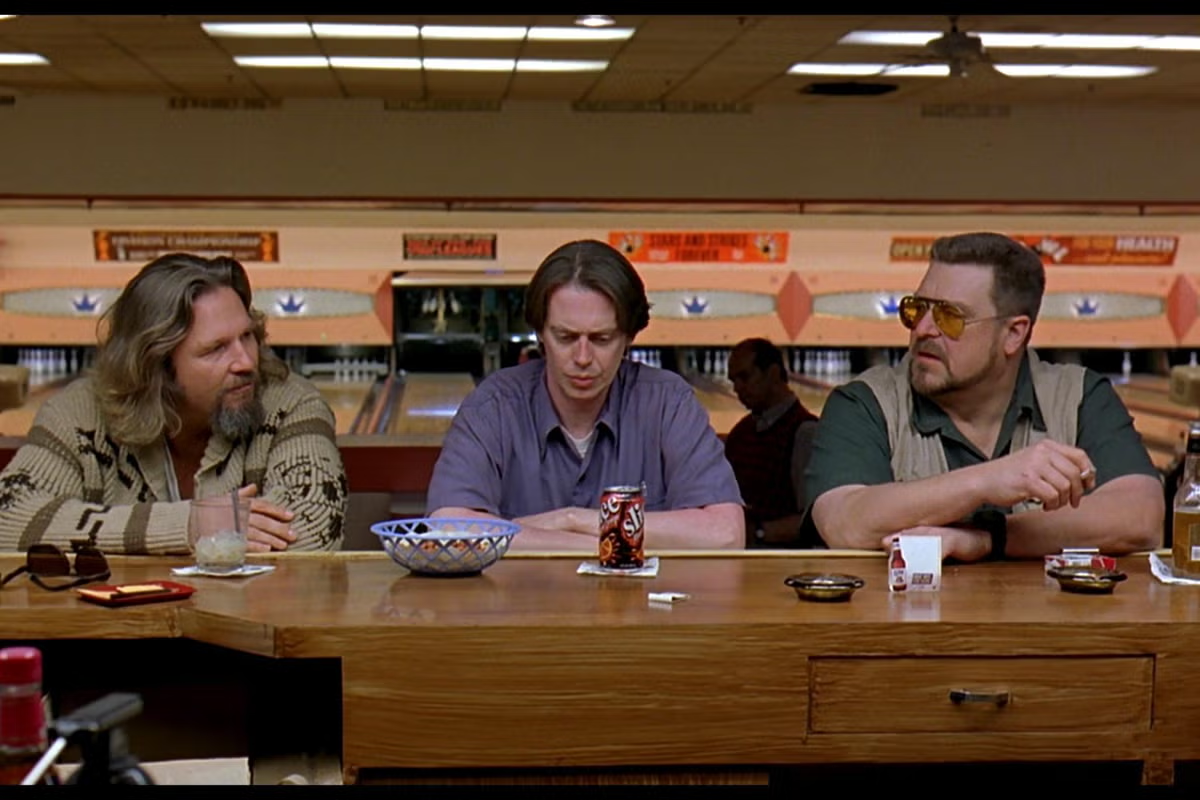
When The Big Lebowski hit theatres in 1998, few could have predicted that it would become a cult religion of sorts. Critics were puzzled, audiences were divided, and box office numbers were modest. Yet, like a perfectly rolled bowling ball that takes a moment before hitting the pins, the Coen brothers’ bizarre comedy found its strike years later. Today, The Big Lebowski isn’t just a movie — it’s an art form, a lifestyle, and, increasingly, an aesthetic touchstone that echoes through modern culture and entertainment.
At its heart, the film is a shaggy detective story turned inside out — a Raymond Chandler-style mystery about nothing in particular. Jeff Bridges’ character, Jeffrey Lebowski (or simply “The Dude”), stumbles through Los Angeles on a quest to replace his soiled rug — “it really tied the room together” — and ends up entangled in a plot involving pornographers, nihilists, and a missing trophy wife. The story barely holds together, but that’s the point. The Dude’s inertia, his calm acceptance of absurdity, became the ultimate metaphor for surviving modern chaos.
The Coen brothers crafted the film with meticulous absurdity. The Dude himself was inspired by a real figure — Jeff Dowd, a leftist political activist turned Hollywood producer whom the Coens met while promoting Blood Simple. They were fascinated by Dowd’s peculiar mix of laziness and charisma, and out of that came one of cinema’s most enduring characters. Bridges later said he based the Dude’s laid-back mannerisms on people he knew in the ‘70s — and even used his own wardrobe for the role, including the famous cardigan that became a cultural symbol of slacker Zen.
Visually, The Big Lebowski sits at an intersection of Americana and surrealism. Cinematographer Roger Deakins bathed Los Angeles in soft, dreamlike light — bowling alleys glowing like temples, cheap apartments transformed into sanctuaries of apathy. This atmosphere has become an artistic language of its own, inspiring painters, photographers, and designers for over two decades. Street artists have immortalised the Dude’s relaxed smirk in murals from Los Angeles to Berlin. Exhibitions have reinterpreted scenes from the movie as installations exploring randomness, fate, and the comfort of giving up control. Even fashion has played along — “Dudeism” as a style blends retro comfort, irony, and anti-materialist cool, reflected in everything from vintage T-shirts to boutique whiskey labels.
And then there’s the music. Few soundtracks have captured such perfect dissonance — from Bob Dylan’s “The Man in Me” to Kenny Rogers’ psychedelic “Just Dropped In (To See What Condition My Condition Was In).” The soundtrack turned The Big Lebowski into a time capsule of American culture’s contradictions: spiritual and hedonistic, messy and meaningful. It’s no wonder so many artists and creatives keep returning to it for inspiration.
That influence has seeped into gaming culture too, especially in spaces where luck, humour, and self-expression intersect. Enter Dudespin Casino — a digital tribute to the movie’s world. Imagine stepping into a bowling alley at 2 a.m., where the neon buzzes softly, the air smells of whiskey and old wood, and everyone’s a little too relaxed to care about winning or losing. That’s the essence of Dudespin: a casino designed not just for players, but for film lovers, for people who appreciate irony and atmosphere as much as jackpots.
Its dark design, glowing with retro neon and cinematic details, channels the energy of the film’s dream sequences and late-night bowling scenes. Every spin feels like part of a story — one told with the same dry humour and sense of absurd adventure that made The Big Lebowski unforgettable. It’s as if the Dude himself decided to open an online casino, with the philosophy that “the strikes and gutters, ups and downs” of gambling are just another roll through life.
What makes Dudespin stand out in the crowded casino landscape is that it doesn’t chase glitz or gloss. Instead, it embraces imperfection — the weird, the witty, the human. It’s for those who don’t just gamble but live for atmosphere, the kind of people who know that art, music, and film make the experience richer. In a sense, Dudespin extends the Coen brothers’ universe — a place where fate and randomness dance together under flickering lights, where irony becomes comfort, and where even losing can feel strangely poetic.
More than two decades after its release, The Big Lebowski continues to inspire everything from minimalist art to immersive digital spaces. Its influence endures not because it preaches meaning, but because it celebrates meaninglessness — the art of simply being, of taking life as it rolls. And Dudespin Casino understands that perfectly. It’s not just a casino; it’s a neon-lit echo of a film that taught us all to relax, sip our drink, and let the universe — or the roulette wheel — do its thing. Because, as every Dude knows, the rug might get ruined, the plan might fall apart, but hey — the game abides.